Griha Pravesh Puja at Home: Complete Guide
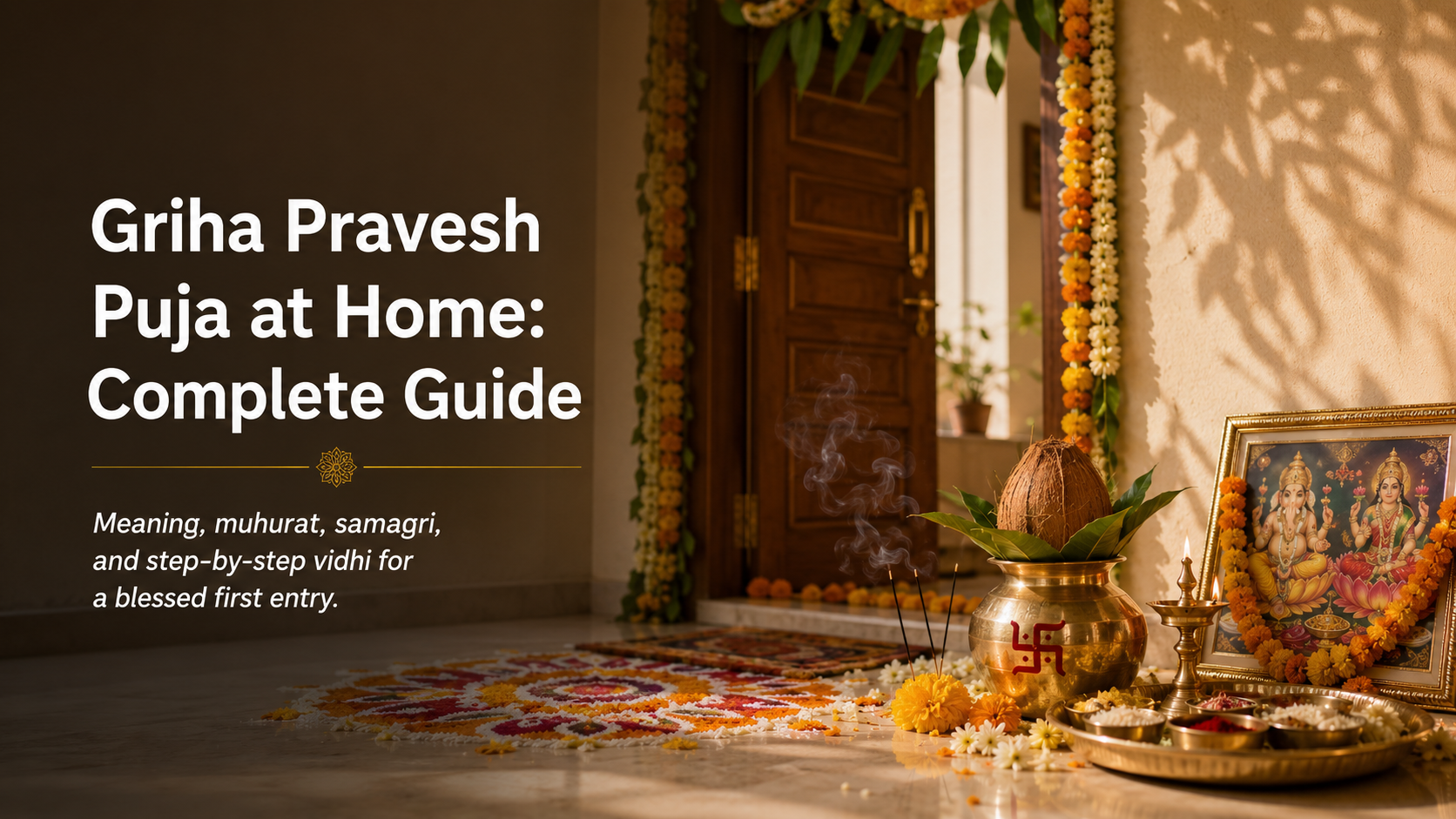
Moving into a new home is more than a change of address. In Hindu tradition, Griha Pravesh is the sacred first entry into a new house, performed to seek peace, prosperity, harmony, and divine protection for the family.
For many families, it is the moment when a newly built, purchased, or renovated property truly becomes a home. The ceremony brings family members together, establishes a spiritual beginning, and seeks blessings for the years ahead.
This complete guide explains what Griha Pravesh Puja means, when it is performed, how to prepare the house, which samagri is generally required, what happens during the ceremony, and how a verified pandit can help you conduct the puja properly.
What Is Griha Pravesh Puja?
Griha Pravesh means the ceremonial entry into a new home. The ritual traditionally honours Vastu Purusha, the spiritual principle associated with the dwelling, while seeking the blessings of Lord Ganesha, Goddess Lakshmi, and the family deity.
The ceremony is intended to purify the home, remove obstacles, and create an auspicious foundation for family life.
Unlike large temple celebrations, Griha Pravesh is performed within the home itself. It can be attended by close family members, relatives, and invited guests in a peaceful and devotional environment.
The ceremony is ultimately about beginning a new chapter with gratitude, faith, and a positive intention for the household.
Why Do Families Perform Griha Pravesh?
Families perform Griha Pravesh for several traditional and spiritual reasons:
- To purify a new or renovated home before regular living begins
- To seek blessings for health, peace, happiness, and prosperity
- To honour Vastu and establish an auspicious atmosphere
- To begin life in the new home with a shared family sankalp
- To express gratitude after buying, constructing, or renovating a house
- To seek divine protection and harmony for everyone living in the home
The exact customs can differ between regions, communities, and family traditions, so the final procedure should always be confirmed with the pandit conducting the ceremony.
Types of Griha Pravesh
Different Hindu traditions describe different circumstances for entering a home. Three commonly referenced forms are:
1. Apoorva Griha Pravesh
This refers to the first ceremonial entry into a newly constructed house.
2. Sapoorva Griha Pravesh
This is generally associated with re-entering a house after a long period of vacancy, significant renovation, or major repairs.
3. Dwandwah Griha Pravesh
This form is associated with re-entry after certain difficult circumstances or natural calamities, with rituals intended to restore peace and auspiciousness.
Because practices vary by region and tradition, share the circumstances of your house with the pandit beforehand so the appropriate procedure can be followed.
Best Time and Muhurat for Griha Pravesh
Griha Pravesh is traditionally performed at an auspicious muhurat selected according to the Hindu Panchang.
The date and time may be determined by considering factors such as:
- Tithi
- Nakshatra
- Weekday
- Panchang considerations
- Family tradition
- Local sunrise and sunset timings
Many families prefer an auspicious period during Shukla Paksha, while certain periods may be avoided according to traditional guidance.
The ideal muhurat can vary depending on the location and the family's circumstances. Therefore, it is best to consult a knowledgeable pandit before finalising the date.
If your house is ready before the selected muhurat, you can complete cleaning and other preparations in advance and reserve the actual ceremonial entry for the chosen time.
How to Prepare Your Home for Griha Pravesh
Proper preparation makes the ceremony easier for both the family and the pandit.
Before the puja day, try to complete basic cleaning, painting, and essential household setup. If possible, avoid leaving major construction or repair work unfinished.
Home Preparation Checklist
- Clean the entire house thoroughly
- Pay special attention to the entrance, kitchen, and puja area
- Decorate the main entrance with a toran or mango leaves
- Prepare a rangoli at the entrance
- Arrange the puja space before the pandit arrives
- Keep the main rooms free from unnecessary clutter
- Arrange comfortable seating for elders and children
- Keep required puja items together in one place
- Make sure the kitchen is ready if the traditional first cooking is part of your ceremony
- Keep the entrance accessible for the pandit and guests
The direction and placement of the puja setup may depend on the home's layout and the family's tradition. Follow the pandit's instructions rather than changing the arrangement based only on general online advice.
Essential Griha Pravesh Puja Samagri
The exact samagri differs according to the ritual, region, and pandit's procedure. Confirm the final list with your pandit before the ceremony.
A basic Griha Pravesh setup may include:
- Lord Ganesha idol or photo — Ganesh Puja
- Goddess Lakshmi idol or photo — Lakshmi Puja
- Kalash — sacred installation and purification
- Coconut — kalash and ceremonial rituals
- Mango or betel leaves — kalash decoration
- Rice — various puja rituals
- Turmeric and kumkum — tilak and auspicious rituals
- Sandalwood — puja offerings
- Flowers and garlands — deity worship and decoration
- Incense sticks — puja atmosphere
- Camphor — aarti
- Ghee or oil diya — lighting the sacred lamp
- Milk, curd, honey, ghee, sugar — panchamrit, if required
- Fruits and sweets — bhog and prasad
- New cloth — puja and deity arrangements
- Puja thali and water pot — ritual requirements
- Havan samagri — havan, if included
Some traditions may require additional items. Items such as sacred earth or cow dung should only be arranged when specifically advised by the pandit according to your family's custom.
Many families also prefer to arrange commonly required items through a puja kit and then purchase any family-specific items separately.
Step-by-Step Griha Pravesh Puja Flow
The exact sequence can vary, but a typical Griha Pravesh ceremony may follow this general flow.
1. Sankalp
The family takes a sacred resolve for peace, prosperity, health, and harmony in the new home.
2. Ganesh Puja
Lord Ganesha is worshipped before the main ceremony to seek blessings and remove obstacles.
3. Kalash and Vastu Worship
The kalash and other sacred elements are prepared, and the house is ritually sanctified according to the pandit's procedure.
4. Ceremonial Griha Pravesh
The family enters the home at the selected muhurat. Traditional customs may include entering with the kalash and placing the right foot first, depending on the family's tradition and the pandit's instructions.
5. Lakshmi and Ganesha Worship
The family seeks blessings for prosperity, wisdom, stability, and harmony within the household.
6. Havan
If included in the selected puja package, a havan may be performed with prescribed offerings while mantras are recited.
7. Navagraha or Vastu Shanti
Depending on the family's requirements and the pandit's recommendation, additional rituals such as Navagraha or Vastu Shanti may be included.
8. Aarti and Prasad
The ceremony concludes with aarti and distribution of prasad among family members and guests.
During the ceremony, family members should remain attentive and follow the pandit's instructions. If the family's tradition includes boiling milk until it rises or overflows slightly, this can be performed as part of the first cooking ritual with a calm and grateful mindset.
How a Verified Pandit Helps
For families performing Griha Pravesh for the first time, having an experienced pandit can make the entire process much easier.
A knowledgeable pandit can guide you through:
- Selecting or confirming the appropriate muhurat
- Understanding the required samagri
- Performing the correct mantras and rituals
- Following the appropriate sequence
- Conducting the entrance ceremony
- Performing Havan or Vastu-related rituals when required
- Answering family-specific questions before the puja
On AbilGulal, families can book a trusted Panditji online and share important details such as location, language preference, house type, and ceremony requirements.
It is helpful to communicate special requirements before booking. For example, you may want to mention:
- Preferred language
- Whether Havan is required
- Vastu-related requirements
- Approximate number of family members
- Specific family traditions
- Any additional ritual requirements
Choosing the right package is also important. A simple Griha Pravesh may require a standard ceremony, while a more detailed ceremony involving Havan and Vastu Shanti may require additional arrangements.
Griha Pravesh Do's and Don'ts
Do's
- Keep the home clean and organised
- Wear clean and respectful traditional clothing
- Follow the selected muhurat
- Listen carefully to the pandit's instructions
- Involve family members in the sankalp and aarti
- Keep all puja materials ready before the ceremony
- Maintain a peaceful atmosphere
- Complete the ceremony with gratitude and respect
Don'ts
- Do not leave unnecessary clutter around the puja area
- Do not treat the ceremony only as a photo opportunity
- Do not ignore the pandit's instructions during the ceremonial entry
- Do not start unnecessary arguments or disruptive activities during the puja
- Do not leave the altar or puja area untidy after the ceremony
- Do not assume that every family's ritual sequence is identical
The purpose of Griha Pravesh is to create an auspicious beginning, so the atmosphere should remain calm and devotional throughout the ceremony.
What to Do After Griha Pravesh Puja
After the aarti and distribution of prasad, thank the pandit and elders who participated in the ceremony.
Many families continue the auspicious atmosphere by:
- Lighting a diya in the evening
- Keeping the entrance decorated with rangoli
- Preparing a simple sattvic meal
- Spending time with family members
- Keeping the home peaceful for the remainder of the day
There is no need to worry if the house is not completely furnished. Griha Pravesh is about beginning life in the new home with an auspicious intention, not about having a perfectly decorated property.
The house will gradually become a home through everyday moments, family conversations, meals, celebrations, and memories.
Frequently Asked Questions
Can Griha Pravesh Puja be performed at home?
Yes. Griha Pravesh is traditionally performed in the house itself. A pandit can guide the family through the required rituals and sequence.
What should I prepare before the pandit arrives?
Complete basic cleaning, prepare the puja space, arrange the required samagri, decorate the entrance if desired, and keep the family ready for the selected muhurat.
Is Havan compulsory for Griha Pravesh?
Not necessarily. The inclusion of Havan depends on the family's tradition, the selected puja, and the pandit's guidance.
How should I select a Griha Pravesh muhurat?
The muhurat should ideally be selected using the relevant Panchang considerations for your location and circumstances. Consult a knowledgeable pandit before finalising the date and time.
Can I arrange the puja samagri myself?
Yes. Families can purchase the required items themselves or use a suitable puja kit. Always confirm the final list with the pandit because requirements vary.
How early should I book a pandit?
It is better to book in advance, especially if your Griha Pravesh date falls during a popular auspicious period. This gives the pandit enough time to confirm availability and any special requirements.
Final Thoughts
Griha Pravesh Puja is more than a traditional ceremony. It is a meaningful family moment that marks the beginning of a new chapter.
With proper home preparation, the right samagri, an appropriate muhurat, and guidance from a verified pandit, families can conduct the ceremony with greater confidence and peace of mind.
If you are preparing to enter your new home, arrange the essentials in advance, confirm the ceremony details with your Panditji, and invite your loved ones to share this important beginning.
Book a verified Panditji through AbilGulal and plan your Griha Pravesh Puja with confidence.